
Keytruda
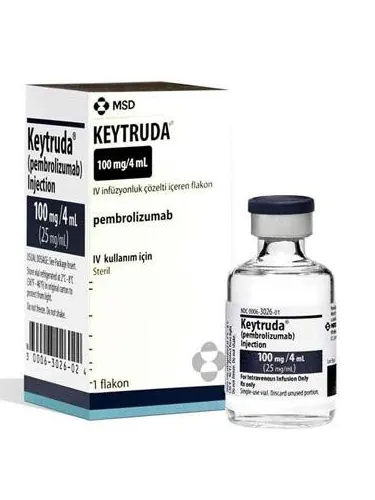
Powerful anti-cancer effects.
Significantly reduces the risk of disease progression and death.
What is Keytruda?
Keytruda is a prescription medication that is a type of immunotherapy called an immune checkpoint inhibitor. Its active ingredient is pembrolizumab, a monoclonal antibody that works by helping the immune system, specifically T cells, to identify and attack cancer cells. It is used to treat various types of cancer, sometimes on its own and sometimes in combination with other treatments like chemotherapy.
Keytruda side effects
The following is a partial list of mild side effects of Keytruda. To learn about other mild side effects, talk with your doctor or pharmacist
What Keytruda is used for?
Keytruda is prescribed to treat several types of cancer, including:
Important considerations
Typical dosages
The following information describes dosages that are commonly used or recommended. However, your doctor will prescribe the Keytruda dosage that’s right for you.
Dosage for certain cancers in adults
Keytruda is used to treat several types of cancer in adults. The recommended dosage for all Keytruda’s uses is a total of 400 mg every 6 weeks. To achieve this dosage, your doctor may give you 200 mg every 3 weeks or 400 mg every 6 weeks. Your doctor will determine the dosing schedule that’s best for you.
Depending on your condition, your doctor may recommend you take Keytruda by itself or with other cancer treatments, such as chemotherapy.

Long-term treatment
The length of time you’ll receive Keytruda depends on certain factors. These include how your body responds to the drug and your condition.
For some cancers, Keytruda may be given for up to 1 year. Typically, Keytruda is not given for more than 2 years. This is because clinical trials haven’t looked at whether the drug is safe or effective if it’s used for longer than 2 years. However, you and your doctor will determine how long you should keep taking Keytruda.
Product Details
- The medicine contains the active ingredient pembrolizumab, which is a monoclonal antibody.
- It helps your immune system fight your cancer.
- The medicine is used in adults to treat:
- a certain type of skin cancer, called black skin cancer (melanoma)
- a certain type of lung cancer, called non-small cell lung cancer
- a certain type of cancer, called classical Hodgkin's lymphoma
- a certain type of cancer, called bladder cancer (urothelial carcinoma)
- a certain type of cancer of the head and neck region, called squamous cell carcinoma of the head and neck region
- a certain type of kidney cancer, called renal cell carcinoma
- a certain type of cancer in the colon or rectum (called colorectal cancer), in the uterus (called endometrial cancer), in the stomach (called gastric cancer), in the small intestine (called small bowel cancer), or in the bile duct or gallbladder (called biliary cancer) in which high-frequency microsatellite instability (MSI-H) or mismatch repair deficiency (dMMR) has been detected
- a certain type of cancer called esophageal cancer
- a certain type of breast cancer called triple-negative breast cancer (breast cancer)
- a certain type of uterine cancer called endometrial cancer
- a certain type of cancer called cervical cancer
- a certain type of stomach cancer, called adenocarcinoma of the stomach or gastroesophageal junction
- a certain type of cancer in the bile duct or gallbladder, called biliary carcinoma
- used.
- The medicine is used in children and adolescents:
- from age 3 for the treatment of a certain type of cancer, called classical Hodgkin lymphoma
- from age 12 for the treatment of a certain type of cancer, called melanoma
- applied.
- Patients receive this medicine if their cancer has spread or cannot be removed surgically.
- Patients receive pembrolizumab after surgical removal of their melanoma, non-small cell lung cancer, or renal cell carcinoma to prevent the cancer from recurring (adjuvant therapy).
- Patients receive this drug before surgery (neoadjuvant therapy) to treat non-small cell lung cancer or triple-negative breast cancer and then continue to receive the drug after surgery (adjuvant therapy) to prevent the cancer from recurring.
- Pembrolizumab can be given in combination with other medicines for the treatment of cancer, with or without radiotherapy. It is important that you also read the package leaflets for these other medicines. If you have any questions about these medicines, ask your doctor.
- This medicine must not be used on you if
- if you are allergic to pembrolizumab or any of the other ingredients of this medicine. Talk to your doctor if you are not sure.
- The medicine will be given to you in a hospital or
outpatient clinic under the supervision of a doctor
experienced in cancer treatment.
- The recommended dose for adults is either 200 mg every 3 weeks or 400 mg every 6 weeks.
- The recommended dose for children and adolescents 3 years and older with classic Hodgkin lymphoma and children and adolescents 12 years and older with melanoma is 2 mg/kg body weight (up to a maximum of 200 mg) every 3 weeks.
- Your doctor will decide how many treatments you need.
- If you miss a treatment
- Contact your doctor immediately to catch up on the missed treatment.
- It is very important that you do not miss any treatment with this medicine.
- If you cancel the application
- Stopping treatment may cancel out the effect of this medicine. Do not stop treatment with this medicine before discussing it with your doctor.
- If you have any further questions on the use of this medicine, ask your doctor.
- You will also find this information on the patient card given to you by your doctor. It is important that you keep this card with you and show it to your partner or caregiver.
- Like all medicines, this medicine can cause side effects, although not everybody gets them.
- If you receive this medicine, you may experience some serious side effects.
- The following side effects have been reported with pembrolizumab alone:
- Very common (may affect more than 1 in 10 people)
- Decrease in the number of red blood cells
- Decreased thyroid function
- Decreased hunger
- Headache
- Shortness of breath; cough
- Diarrhea; stomach pain; nausea; vomiting; Constipation
- Itching; skin rash
- Pain in muscles and bones; joint pain
- Feeling tired/exhausted; unusual tiredness or weakness; swelling; fever
- Common (may affect up to 1 in 10 people)
- Lung infection
- Reduced platelet count (easy bruising or bleeding); reduced white blood cell count (neutrophils, lymphocytes)
- Reactions related to the drug infusion
- Overactive thyroid; hot flashes
- Low sodium, potassium, or calcium levels in the blood
- Difficulty sleeping
- Dizziness; inflammation of the nerves causing numbness, weakness, tingling, or burning pain in the arms and legs; lack of energy (lethargy); changes in taste
- Dry eyes
- Irregular heart rhythm
- High blood pressure
- Pneumonia
- Inflammation of the intestines; dry mouth
- Inflammation of the liver
- Red, raised rash, sometimes with blisters; inflammation of the skin; patchy discoloration of the skin (vital spot disease); dry, itchy skin; hair loss; acne-like skin problems
- Muscle pain or tenderness of the muscles; pain in the arms or legs; joint pain with swelling
- Flu-like illness; chills
- Elevated liver enzymes in the blood; elevated calcium levels in the blood; abnormally altered values in kidney function tests
- Occasionally (may affect up to 1 in 100 people)
- Decreased number of white blood cells (leukocytes); inflammatory reaction directed against platelets; increased number of white blood cells (eosinophils)
- An immune disease that can affect the lungs, skin, eyes, and/or lymph nodes (sarcoidosis)
- Decreased hormone secretion from the adrenal glands; Inflammation of the pituitary gland, located at the base of the diencephalon; Inflammation of the thyroid gland
- Type 1 diabetes, including diabetic ketoacidosis
- A condition in which muscles become weak and tire easily; seizures
- Eye inflammation; eye pain, irritation, itching or redness; unpleasant sensitivity to light; Seeing "flying flies"
- Inflammation of the heart muscle, which may manifest as shortness of breath, irregular heartbeat, feeling tired/fatigue, or chest pain ; pericardial effusion; pericarditis
- Inflammation of the pancreas; inflammation of the stomach; an ulcer that develops on the lining of your stomach or in the upper part of your small intestine
- Thickened, sometimes scaly skin growth; small skin bumps, lumps, or sores; changes in hair color
- Tendonitis
- Inflammation of the kidneys
- Increased levels of amylase (a starch-breaking enzyme)
- Rare (may affect up to 1 in 1,000 people)
- Inflammatory reaction directed against red blood cells, a condition called "hemophagocytic lymphohistiocytosis," in which the immune system produces too many infection-fighting cells called histiocytes and lymphocytes, which can cause various symptoms; feeling faint, dizzy, shortness of breath, or pale skin (signs of low red blood cell levels, possibly caused by a form of anemia called "isolated aplastic anemia")
- Reduced parathyroid function, which can manifest as muscle cramps or spasms, fatigue, and weakness
- Temporary inflammation of the nerves that causes pain, weakness, and paralysis of the extremities (Guillain-Barré syndrome); inflammation of the brain, which may be accompanied by confusion, fever, memory loss, or seizures (encephalitis); pain, numbness, tingling, or weakness in the arms or legs; bladder or bowel problems, including the need to urinate more frequently, bladder weakness (urinary incontinence), difficulty urinating, and constipation (myelitis); swelling of the optic nerve, which may cause loss of vision in one or both eyes, pain with eye movement, and/or loss of color vision (optic neuritis); inflammation of the membranes covering the brain and spinal cord, which may cause stiff neck, headache, fever, sensitivity of the eyes to light, nausea, or vomiting (meningitis)
- Vascular inflammation
- Lack or reduction of digestive enzymes produced by the pancreas (exocrine pancreatic insufficiency); a hole in the small intestine (perforation); celiac disease (characterized by symptoms such as stomach pain, diarrhea, and bloating after consuming foods containing gluten)
- Inflammation of the bile ducts
- Itching, blistering, peeling, or sores of the skin and/or ulcers in the mouth or mucous membranes in the nose, throat, or genital area (Stevens-Johnson syndrome or toxic epidermal necrolysis); tender, red bumps under the skin
- Condition in which the immune system attacks the glands that produce fluids in the body, such as tears and saliva (Sjögren's syndrome)
- Cystitis. Signs and symptoms may include frequent and/or painful urination, urgency, blood in the urine, pain or pressure in the lower abdomen.
- Very common (may affect more than 1 in 10 people)
- The following side effects were reported in clinical trials with
Pembrolizumab in combination with chemotherapy or chemotherapy
with radiotherapy:
- Very common (may affect more than 1 in 10 people)
- Decreased red blood cell count; decreased white blood cell count (neutrophils); decreased platelet count (easily bruised or bleeding)
- Decreased thyroid activity
- Decreased blood potassium levels; decreased hunger
- Difficulty sleeping
- Inflammation of the nerves causing numbness, weakness, tingling, or burning pain in the arms and legs; headache; dizziness
- Shortness of breath; cough
- Diarrhea; nausea; vomiting; stomach pain; constipation
- Hair loss; itching; rash
- Pain in muscles and bones; joint pain
- Feeling tired/exhausted; unusual fatigue or weakness; fever; swelling
- Elevated levels of the liver enzyme alanine aminotransferase (ALT) in the blood; elevated levels of the liver enzyme aspartate aminotransferase (AST) in the blood; abnormally altered values in kidney function tests
- Common (may affect up to 1 in 10 people)
- Lung infection
- Decreased number of white blood cells (neutrophils) with fever; decreased number of white blood cells (leukocytes, lymphocytes)
- Reactions associated with the infusion of the drug
- Decreased adrenal hormone secretion;
- Overactive thyroid;
- Decreased sodium or calcium levels in the blood
- Changes in taste;
- Dry eyes
- Irregular heart rhythm
- High blood pressure
- Pneumonia
- Inflammation of the intestine;
- Inflammation of the stomach;
- Dry mouth
- Inflammation of the liver
- Red, raised rash, sometimes with blisters; inflammation of the skin; acne-like skin problems; dry, itchy skin
- Muscle pain or tenderness; pain in the arms or legs; joint pain with swelling
- Sudden kidney failure
- Swelling; flu-like illness; chills
- Increased blood bilirubin levels; increased levels of the liver enzyme alkaline phosphatase; abnormally altered kidney function tests; increased blood calcium levels
- Occasionally (may affect up to 1 in 100 people)
- Inflammatory reaction directed against red blood cells; increased number of certain white blood cells (eosinophils)
- Inflammation of the pituitary gland, located at the base of the diencephalon
- Type 1 diabetes, including diabetic ketoacidosis
- Inflammation of the brain, which may be accompanied by confusion, fever, memory loss, or seizures (encephalitis); seizures
- Eye inflammation; eye pain, irritation, itching or redness; unpleasant sensitivity to light; seeing "flying flies"
- Inflammation of the heart muscle, which may manifest as shortness of breath, irregular heartbeat, feeling tired/fatigue, or chest pain ; pericardial effusion; pericarditis
- Vascular inflammation
- Pancreatitis; an ulcer that develops on the lining of your stomach or in the upper part of your small intestine
- Thickened, sometimes scaly skin growth; patchy discoloration of the skin (vital spot disease); small skin bumps, lumps, or sores
- Tendonitis
- Inflammation of the kidneys; cystitis. Signs and symptoms may include frequent and/or painful urination, urgency, blood in the urine, pain or pressure in the lower abdomen.
- Elevated levels of amylase (a starch-breaking enzyme)
- Rare (may affect up to 1 in 1,000 people)
- Inflammatory reaction directed against red blood cells or platelets
- An immune disease that can affect the lungs, skin, eyes, and/or lymph nodes (sarcoidosis)
- Reduced parathyroid function, which can manifest as muscle cramps or spasms, fatigue, and weakness
- A condition in which muscles become weak and tire easily; a temporary inflammation of the nerves, causing pain, weakness, and paralysis of the extremities (Guillain-Barré syndrome); swelling of the optic nerve, which may lead to loss of vision in one or both eyes, pain with eye movement, and/or loss of color vision (optic neuritis); inflammation of the membranes covering the spinal cord and brain, which may manifest as stiff neck, headache, fever, sensitivity of the eyes to light, nausea, or vomiting (meningitis)
- Lack or decrease in digestive enzymes produced by the pancreas (exocrine pancreatic insufficiency); a hole in the small intestine (bowel perforation); Celiac disease (characterized by symptoms such as stomach pain, diarrhea, and bloating after consuming foods containing gluten)
- Inflammation of the bile ducts
- Itching, blistering, peeling, or sores of the skin and/or ulcers in the mouth or mucous membranes in the nose, throat, or genital area (Stevens-Johnson syndrome); tender, red bumps under the skin; changes in hair color
- A condition in which the immune system attacks the glands that produce fluids in the body, such as tears and saliva (Sjögren's syndrome)
- Very common (may affect more than 1 in 10 people)
- The following side effects were reported in clinical trials with
Pembrolizumab in combination with axitinib or lenvatinib:
- Very common (may affect more than 1 in 10 people)
- Urinary tract infections (more frequent urination and painful urination)
- Decreased red blood cell count
- Decreased thyroid activity
- Decreased hunger
- Headache; changes in taste
- High blood pressure
- Shortness of breath; cough
- Diarrhea; stomach pain; nausea; vomiting; constipation
- Skin rash; itching
- Joint pain; pain in muscles and bones; muscle pain or tenderness in muscles; pain in arms or legs
- Feeling tired/exhausted; unusual tiredness or weakness; swelling; fever
- Increased levels of lipase, a fat-splitting enzyme; Elevated liver enzyme levels in the blood; abnormally altered values in kidney function tests
- Common (may affect up to 1 in 10 people)
- Lung infection
- Reduced number of white blood cells (neutrophils, lymphocytes, leukocytes); reduced number of platelets (easy bruising or bleeding)
- Reactions related to the infusion of the medicine
- Decreased adrenal hormone secretion;overactive thyroid; inflammation of the thyroid
- Low sodium, potassium, or calcium levels in the blood
- Difficulty sleeping
- Dizziness; inflammation of the nerves causing numbness, weakness, tingling, or burning pain in the arms and legs Lack of energy (lethargy)
- Dry eyes
- Irregular heart rhythm
- Pneumonia
- Inflammation of the intestines; inflammation of the pancreas; inflammation of the stomach; dry mouth
- Inflammation of the liver
- Red, raised skin rash, sometimes with blisters; inflammation of the skin; dry skin; acne-like skin problems; hair loss
- Joint pain with swelling
- Inflammation of the kidneys
- Flu-like illness; chills
- Elevated levels of amylase (a starch-degrading enzyme); elevated blood bilirubin; elevated levels of the liver enzyme alkaline phosphatase; elevated blood calcium levels
- Occasionally (may affect up to 1 in 100 people)
- Increased number of certain white blood cells (eosinophils)
- Inflammation of the pituitary gland, located at the base of the diencephalon
- Type 1 diabetes, including diabetic ketoacidosis
- A condition in which muscles become weak and tire easily; inflammation of the brain, which may be accompanied by confusion, fever, memory loss, or seizures (encephalitis)
- Eye inflammation; eye pain, irritation, itching or redness; unpleasant sensitivity to light; seeing "flying flies"
- Inflammation of the heart muscle, which may present as shortness of breath, irregular heartbeat, feeling tired/fatigue, or chest pain Pericardial effusion
- Angiogenesis
- An ulcer that develops on the lining of your stomach or in the upper part of your small intestine
- Dry, itchy skin; thickened, sometimes scaly skin growth; patchy discoloration of the skin (vital spot disease); small skin bumps, nodules, or sores; changes in hair color
- Tendonitis
- Rare (may affect up to 1 in 1,000 people)
- Reduced parathyroid function, which may manifest as muscle cramps or spasms, fatigue, and weakness.
- Swelling of the optic nerve, which may lead to loss of vision in one or both eyes, pain with eye movement, and/or loss of color vision. (optic neuritis)
- A hole in the small intestine (bowel perforation)
- Itching, blisters, peeling, or sores of the skin and/or ulcers in the mouth or mucous membranes of the nose, throat, or genital area (toxic epidermal necrolysis or Stevens-Johnson syndrome)
- A condition in which the immune system attacks the glands that produce fluids in the body, such as tears and saliva (Sjögren's syndrome)
- Cystitis. Signs and symptoms may include frequent and/or painful urination, urgency, blood in the urine, pain or pressure in the lower abdomen.
- Other side effects reported with a frequency of "not
known" (frequency cannot be estimated from the
available data)
- Lack or reduction of digestive enzymes produced by the pancreas (exocrine pancreatic insufficiency); celiac disease (characterized by symptoms such as stomach pain, diarrhea, and bloating after consuming foods containing gluten).
- When this medicine is used in combination with enfortumab vedotin, skin rash occurs more frequently than when this medicine is used alone.
- Very common (may affect more than 1 in 10 people)
- If you experience any side effects, contact your doctor. This also applies to side effects not listed.
- If you are pregnant, think you may be pregnant, or are planning to become pregnant, consult your doctor before using this medicine.
- pregnancy
- You must not receive this medicine if you are pregnant, except on the specific recommendation of your doctor.
- This medicine may harm or cause the death of your unborn child.
- If you are a woman of childbearing age, you must use reliable contraception during treatment with this medicine and for at least four months after the last dose.
- Breastfeeding
- If you are breastfeeding, talk to your doctor.
- You must not breastfeed while using this medicine.
- It is not known whether this medicine passes into breast milk.
- Your doctor will give you this medication as an approximately 30-minute intravenous infusion (IV).
- Use with other medicines
- Inform your doctor if you
- Take other medicines that weaken your immune system. These include, for example, corticosteroids such as prednisone. These medicines can affect the effect of pembrolizumab. However, your doctor may give you corticosteroids if you are already being treated with this medicine to reduce side effects that you may experience. Corticosteroids may also be given to you before you receive pembrolizumab in combination with chemotherapy to prevent and/or treat nausea, vomiting, and other side effects caused by chemotherapy.
- Are taking/taking, have recently taken/taken, or intend to take/take any other medicines.
- Inform your doctor if you
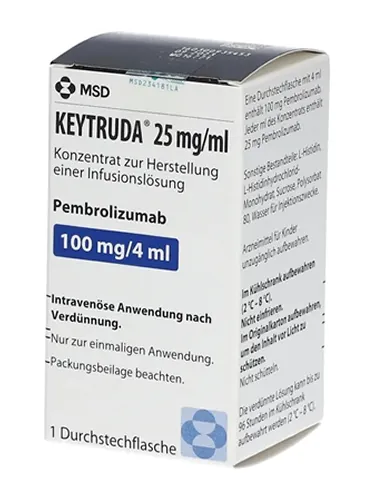
Pembrolizumab 100 mg/4 mL (25 mg/mL) solution in a single-dose vial injection
What is Pembrolizumab used for :
Pembrolizumab is a medication that is used to treat the following indications: